
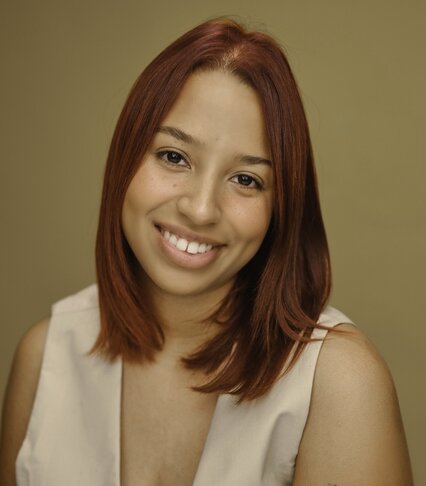
“I think everyone should be proud of where they come from and who they are, even if that seems to be a lot of things, because everyone is multiple things!”
Blaise
– on intersectionality, AuDHD and becoming one of our Young Campaigners
When did you first know or start to think you were autistic?
I first started to suspect I was autistic towards the start of sixth form, when I was 16. It was 2020 when I started college, and lots of my lessons were online, so my timetable was quite disrupted. It really stressed me out and made me so anxious and unwell that I ended up dropping out of sixth form for the year.
One of my best friends at the time was autistic and told me that she got along with me so well that she felt like I could be autistic because we were so alike. At first, I didn’t believe her because I thought autism was something that you could only be diagnosed with as a child. Nobody had ever suggested it to me before. I started researching to see if I felt like it could be true, and suddenly everything began to make sense. During my year out, I was referred to CAMHS for an ADHD assessment, when the psychologist suggested that I might be autistic too.
What was the diagnosis process like for you? What did it mean when you got your diagnosis?
The diagnosis process for me was quite long and challenging, but I’ve heard so many stories from friends about theirs that I’m actually quite grateful for mine. In the great scheme of things, it actually wasn’t so bad. I was on the CAMHS waiting list for just under a year. By this time, I was almost 17.
Gathering evidence was quite hard, since everyone from my past remembered me as a perfect student who never caused problems. Even when I did cause problems, they were immediately forgiven. I started to regret that I didn’t act out more because I often felt like doing so, but tried to keep it inside and not draw any more attention to myself or give anyone any ammunition to bully me.
I was nearing my 18th birthday, and we hadn’t managed to get enough evidence. Despite there being clear signs, I was discharged from CAMHS without a diagnosis but with a letter stating it’s very likely I meet the criteria. I then went back on the adult waiting list and was seen under the NHS Right to Choose the following January, just before my 19th birthday. I was really relieved to be finally officially diagnosed. By this point, I was relatively sure I was autistic, as were all the professionals in my life, but without the letter confirming it, there wasn’t much support I could get in things like my upcoming exams.
You are AuDHD. Could you describe what it is like to experience these two neurodivergences that often seem like opposites in one mind?
Being AuDHD is definitely difficult, as sometimes it feels like my brain wants conflicting things and usually can’t have either. But at the same time, they sort of balance each other out for me. I think on the surface, my ADHD comes across more than my autism does, since I usually come across as quite hyperactive, loud and busy. But I think that comes with the mask that I put on to try and fit into the world.
Sometimes it feels like my ADHD is more digestible than my autism is, since people just perceive my ADHD as me being “quirky”. However, under the surface, I think it’s my autism that governs my routines, how my day goes, my interactions with others and a lot of my emotions too.
Being neurodivergent is just one part of your identity. Could you talk a bit more about intersectionality and how that has shaped your experiences growing up?
As a working-class person of colour who is also autistic, I think I’m always discovering new things about myself. Even though I’m half Jamaican, I’ve never actually been to Jamaica, so I often feel like I’m a little bit out of touch with my heritage because I was born and raised in England, so I’d love to visit one day.
I think through school and college, my friends used to joke that I’d never run out of things to say about myself in an interview. When I fill out surveys or forms and reach the equality monitoring part, I always feel like my identity is too much because there are so many boxes I have to tick, and sometimes I don’t really feel like I identify with any of them.
It can definitely be confusing to navigate being a young person while also coming to terms with all of the different parts of who I am. But I also love who I am. I love that my identity is so interesting and diverse, and it makes me so unique from everybody else. I think everyone should be proud of where they come from and who they are, even if that seems to be a lot of things, because everyone is multiple things! Whether that’s your class, race and disability, or just your likes, dislikes and interests.
As it’s Neurodiversity Celebration Week, what are the things you celebrate about yourself and how you think?
I have a GREAT memory, and it’s one of my favourite things about myself. I definitely think it’s linked to being autistic. It’s been really helpful throughout my education since I can cram for an exam the night before and still do really well, which is so useful when my ADHD makes me procrastinate and I never get any revision done.
I also love how creative I am and how I can think of things that other people usually can’t. I’m definitely a problem solver, which helps a lot in theatre since during production weeks, there’s always some issue that needs to be fixed quickly so the show can go on. I also think that I’m a great writer, especially of spoken word and poetry.
I love how many things I know about my special interest – sharks! I think everyone around me gets shark facts quite often, which I hope they carry with them in case they ever end up on some ocean-related quiz show someday (which would be awesome). I have a really strong sense of justice too. If I find something unfair, I always want to put it right.
What made you want to become one of the National Autistic Society’s Young Campaigners?
I wanted to be a Young Campaigner because I think that the world can be unfair to autistic people like me, and I want to do something to change that. Campaigning to me is being the voice and the representation that I wanted to see when I was younger. It means standing up for people who are like me and have similar stories that I do – young, mixed-race, late-diagnosed autistic people, or autistic people with additional disabilities. I wanted to do just that.
One of the things I love about theatre, spoken word and writing my own work for the stage is that I have the ability to amplify these experiences. It gives room for them to be heard and understood in an accessible way, and the chance to allow people to hear stories that may resonate with them. One of the main aims of my campaigning will always be to create change and make people understand an issue so it can be solved. The part I find most fulfilling and important is letting somebody who relates to the campaign know that their experience matters and that what they’ve been through is valid. It’s important to be stood up for and know that there are people willing to fight for it.
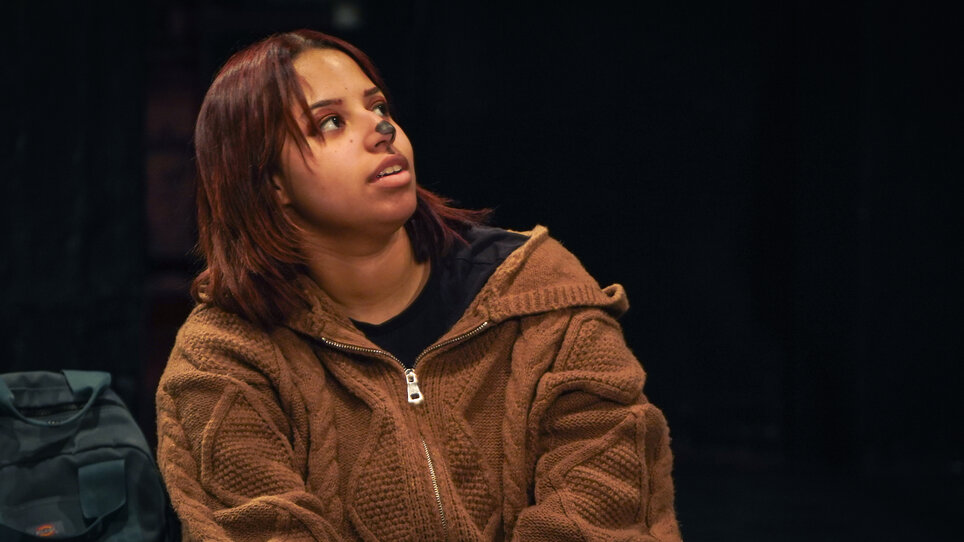
Throughout my life, I’ve always been told or shown that there’s only one right way to campaign, with posters, placards or petitions etc. But on reading the National Autistic Society website, I’ve discovered that there are lots of different ways to campaign, including through creative mediums. This year, I wrote a play about my experiences being autistic, and joining the Young Campaigners has shown me that this does count as a type of campaign in its own way. As an autistic theatre-maker and poet, I’m so excited to learn how to use my special interests for good and do the thing I love most to bring about positive change for people like me.
This Neurodiversity Celebration Week is about making organisational changes from awareness to action. What changes do you think would help remove barriers for young autistic people like you?
I think right now, a huge barrier that’s in place for autistic young people is the harmful rhetoric currently being spread that autism is “over diagnosed”, when that really isn’t the case. This sort of rhetoric dismisses the fact that many autistic young people like me spent years and years with no diagnosis and our mental health in decline because of the lack of understanding and support offered to us by our schools and colleges. There are young autistic people on waitlists for diagnosis right now who aren’t being offered any accommodations in their schools, due to the stigma that surrounds self-diagnosis.
I think it’s a barrier that people assume that a private diagnosis means “paying for a diagnosis”. It ignores the fact that the providers are qualified doctors who are following guidelines to offer a life-changing diagnosis to someone who may have otherwise been waiting for half a decade. I wish it were easier to access support and accommodations without a diagnosis, and that schools and colleges didn’t assume that a diagnosis is just an excuse for laziness or bad behaviour.
Neurodiversity Celebration Week is also about challenging stereotypes. What stereotype about autism do you want to challenge the most?
A stereotype that really frustrates me is that autistic people are assumed to be incapable of having certain hobbies or doing certain things because of the belief that all autistic people are the exact same – when that certainly is not the case at all. I remember in sixth form, one of my support workers was confused when she found out that I was pursuing an autism diagnosis, and she said: “you like drama, don’t you?”
I was really confused because I had no idea how enjoying theatre and drama meant that someone could or couldn’t be autistic. I think that autism can still be perceived in a very stereotypical way by a lot of people. Autistic people can present really differently, and I think that’s where a lot of the confusion comes from. My experiences might be nothing like an 8-year-old autistic boy, but I also might be nothing like another 21-year-old autistic girl. All of those experiences of being autistic are completely valid and okay, but it’s important to know that they will not be the same.
What does autism acceptance mean to you?
To me, autism acceptance means that autistic people are given the tools and support they need to enjoy their lives and be meaningful members of society without judgment or resistance from others or having to prove anything to anyone!