
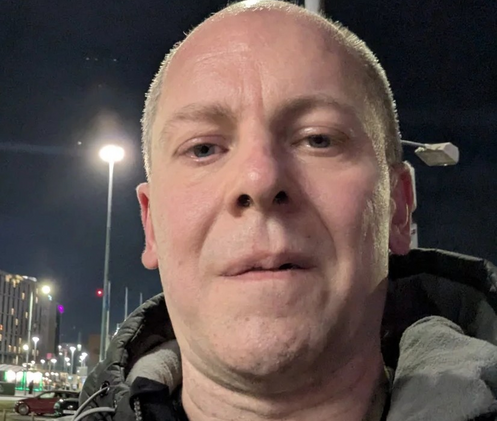
“I’m more accepted as an LGBTQ+ person within the autistic community than I am as an autistic person within the LGBTQ+ community.”
Richard
– on difference, coming out and battling for Pride and equality
When did you first know or start to think you were autistic?
I had my first clues when I was at secondary school and experienced distressing reactions to some of my classes becoming too noisy. I struggled quite a lot with setting up practical tasks in physics and chemistry classes, and I generally wasn’t great with anything that needed me to be really hands-on (e.g. cookery, woodwork, metalwork etc).
Later, when I went to university, I played football for my university’s football club. Although my fitness, energy levels and athleticism were great, I really struggled with ball skills and reacting to the constant changes and transitions that occur during a typical match.
I can definitely remember that senior clubmates were quite hostile towards me in my first season. It felt like ‘you’re not like us, so you’re not with us’, and that kind of ‘exclusive’ attitude coming from other people has been ever-present throughout my life so far.
The big crunch for me was when I was struggling to hold onto full-time employment in the late 2000s/early 2010s. I had been working in financial services, contact centre and complaints roles for about ten years up until that point. I definitely suffered quite a lot with constant stress and anxiety during that time.
It had gotten to a point where I had to take more time off due to sickness, and the increasing turnover of jobs was leading to financial instability and an increasing amount of debt. That was probably the time when I had my autistic ‘light bulb’ moment.
What was the diagnosis process like for you? What did it mean when you got your diagnosis?
My diagnostic process was surprisingly straightforward: I approached my GP first and was referred directly to the local NHS Adult Autistic Assessment Team. It covered quite a wide catchment area, but at that time in 2013, I was informed that I would be on their waiting list for about a year.
So it was really a question of taking my mind off that ‘wait period’ and attending instead to my financial problems. I felt lucky to only be waiting for a year or so to be seen, to be honest, and I didn’t fall into the trap of thinking: ‘It must be a diagnosis, it has to be.’ I felt that I needed to prepare myself for any possibility that the diagnosis process was not going to give me a diagnosis or possibly a diagnosis for something else with the same signs.
My interview appointment in September 2014 was about an hour and a half, with a couple of practitioners present. I had gathered a lot of evidence, including a letter written out by my parents outlining my childhood and ‘growing into adulthood’ experiences.
At the end of the discussion, I was given a diagnosis letter and gently advised that ‘this is the time now for you to give yourself a break’. I have tried hard to carry that advice forward as my life has progressed, especially in the face of pressure from other people who, for their own reasons, simply can’t or won’t allow that gentle self-care process to take place.
Despite my diagnosis letter, I did not have access to any post-diagnosis support networks in Newcastle upon Tyne at that time. They simply weren’t available, and they did not exist for adults when I lived in Manchester in 2017 either. It wasn’t until I moved to my current city, Edinburgh, in 2018 that I finally got the comprehensive support I needed. So it was four years of trying to muddle through life after my diagnosis, I guess.
You realised you were pansexual and autistic at different times in your life. What was it like discovering these different parts of your identity and sharing them with others?
I have actually come out three times during the course of my life so far. I came out as gay in 1998 upon graduation from university, after struggling to deal with this in the football club that I was in. In the late 1990s, I was simply unable to reveal my authentic self to my clubmates or anyone else. I slowly came out to my family and close friends during the following few years and began to expand myself within the Edinburgh gay scene. It still felt quite scary for me, and I felt vulnerable. I think it wasn’t until about 2003 that I became properly comfortable, more relaxed and public about it.
Upon my diagnosis as being autistic and dyspraxic in 2014, I came out as such quite quickly. I was quite public about it with local agencies, including the health service, to provide ‘my truth’ and my personal circumstances. I felt that, unlike my coming out as gay sixteen years earlier, I really had nothing to apologise for, and perhaps I felt a bit more militant about it: my attitude was that ‘you either accept all of me just the way I am or nothing at all’.
So that sense of identity, which felt much more concrete, made that second coming out feel much easier to deal with, and I took a lot more confidence from it. That said, I do still have continuing and acute struggles with the general public attitude of ‘you’re not like us, therefore you’re not with us.’
All too often, people try to control my life with fear and micro-aggressions, when in fact it is their own ignorance, insecurities and lack of emotional intelligence that is the real problem. I enthusiastically celebrate Autism Pride Day every year on 18 June to highlight my lived experiences and inspire other members of the LGBTQ+Autistic community.
My third coming out took place in 2024, when I realised that I wasn’t just sexually attracted to men, I was attracted to women and people of other genders as well. I am a big fan of drag and burlesque shows, and my realisation took place within this environment. I took a lot of helpful advice and reassurance from some stage performers in this world of entertainment, which helped make the process of coming out this time much more comfortable. I have a lot to thank them for because they have taken me to their hearts and shown me what it truly means to be your authentic self. Learning about yourself and accepting it is a lifelong journey.
What has your experience as an autistic person in the LGBTQ+ community been like?
The first thing that I need to say is that I’m a fair bit more accepted as an LGBTQ+ person within the autistic community than I am as an autistic person within the LGBTQ+ community. I think the probable reason for this is that being autistic is a thing that touches upon every area of your life, so the bonds between autistic people can be much stronger. Gender and sexuality considerations don’t always create as many barriers between people with similar lived experiences in the autistic community.
There isn’t an unwritten set of ‘standards’ that autistic people have to meet in order to be accepted into the community. However, in the LGBTQ+ community, I think people are much more segmented: there are various sexualities, genders, preferences and scenes under that umbrella that occasionally clash with each other. People can find themselves ‘othered’ within LGBTQ+ quite easily.
My own relationship with LGBTQ+ scene venues in Edinburgh and Glasgow has been somewhat ‘hit and miss’. There are some venues I refuse to visit now because their primary motive is financial profit, not friendly, welcoming customer welfare. They lack the understanding that simple, relatively cheap adjustments to their advertising and providing aids (such as earplugs, headphones, dark glasses to cut down bright lights and stim toys) would help prospective customers and actually increase their income and positive word-of-mouth reputation.
As someone who is older, with pronounced sound sensitivity and a tendency to experience sensory overload at the end of the night, this is a big issue for me.
What does Pride mean to you?
The feeling of celebration at Pride is amazing. It’s a day you can try to be your most authentic self and share that real sense of authenticity with those closest to you, as well as the wider community. It’s a day for visibility and awareness.
Yes, we are there to celebrate our amazing and vibrant community, but it’s also a time to highlight that not every LGBTQ+ person in the UK or indeed the wider world has or feels the sense of freedom that they should have. The fact that we still have a lot of work to do to ensure equality for all and stuff we need to protest about shows that the original message of “Pride is a Protest” is still important and should never be sacrificed in the name of entertainment. We can still celebrate our progress and achievements, but not lose sight of the protest element of Pride.
What do you think would improve accessibility at Pride events?
I will also say that my experience of the organisation of Pride events is similarly ‘hit and miss’. The best ones I have been to where I feel properly seen are Dublin Pride and Stirling Pride. Glasgow Pride was okay, but could do better. Pride Edinburgh has become the worst Pride event that I’ve been to. Their marching route and live entertainment areas are in inaccessible, crowded areas that are often beyond capacity. It wasn’t always that way, as I can attest that I was featured as one of the Pride Edinburgh ‘Humans of Pride’ in their social media advertising in 2019. The Equality Network in Scotland now hosts its own alternative event in May for disabled and neurodivergent people.
Dublin Pride shows what can be achieved when disability groups get involved in the planning and organising process. At the Pride event, there was a designated entrance/exit for disabled people to use with an accompanying enclosed white tent in the park (run by NeuroPride Ireland and Aspire Ireland, the Autism Spectrum Association for Ireland). It was close enough to the main stage for autistic people to pop out and see what’s going on, but not so close that it would be too loud and distressing for them. Plus, there was a portable toilet nearby.
There are also various intersectional community bodies, such as NeuroPride Ireland in the Republic of Ireland, which cater for people with LGBTQ+/autistic intersections.
I think having those intersectional bodies catering for most intersections with autism would go a long way to overcoming the often-insurmountable social obstacles at the planning and organising stage of these Pride events.
The provision of earplugs, headphones and dark glasses to cut down bright lights and stim toys for autistic people is becoming more mainstream now in the gigs, arts and exhibitions worldwide. So why should Pride events be any different?
What is one thing you would like more people to understand about autism?
Receiving my autism diagnosis brought about a big wave of emotions. The strongest feeling I experienced was relief: finally understanding myself and realising that my struggles weren’t due to my own fault or personal failure and that I do, in fact, belong somewhere.
As a late-diagnosed autistic person, I definitely went through a grief process to mourn past misunderstandings and missed support. But of course, people also feel anger post-diagnosis, and sadly, I am still one of them; anger at the years of invalidation and at the professionals and caregivers who, for reasons of their own, overlooked the signs of what was really going on.
And these things do create an ongoing sense of resentment and a lack of trust about the motives and agendas of neurotypical people who are making decisions that affect us, which can be hard to overcome. I think it is a very important thing for the general public to understand that, to try and at least meet us halfway with an empathetic mind and to treat us as individuals according to our needs to allow us to grow and prosper.
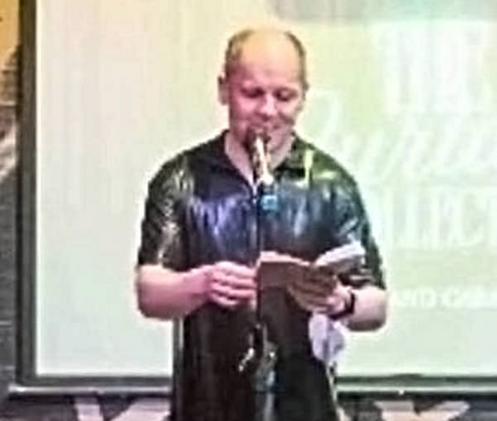
The other, more positive emotion I felt was validation. Finding a community and gaining a clearer sense of identity empowered me in long-term ways that I totally never expected. I have created and released music, written poetry and created artworks based upon my autistic lived experiences and shared those with people to generate a greater understanding. I have performed quite a lot of poetry and songs recently at open mic events in Edinburgh and Glasgow, garnering quite a lot of positive feedback.
What does autism acceptance mean to you?
Acceptance should only mean and lead to one thing, and that’s... equality. Awareness and acceptance are sometimes not enough for us as an autistic community because acceptance still doesn’t fully encourage positive motivation or engagement for people to understand and respond to the reasons why our behaviour is so different from other people. It can still lead to autistic people being criticised and shunned by their peers.
All too often, I have had experiences of being told that my autistic behaviour is “inappropriate” when really what is meant by it is that it is really inconvenient or doesn’t fit in with the rather narrow and selfish ‘vision of perfection’ that some people can carry as part of their world view in society. Many autistic people have a great abundance of empathy as a result of their struggles and upbringing, and it is not hard to see how and why flashpoints might occur.
For me, it is quite a common and tiring battle to have to fight against those attitudes, and it’s a big reason why I always aim for the goal of equality for autistic people rather than just settle for acceptance.