

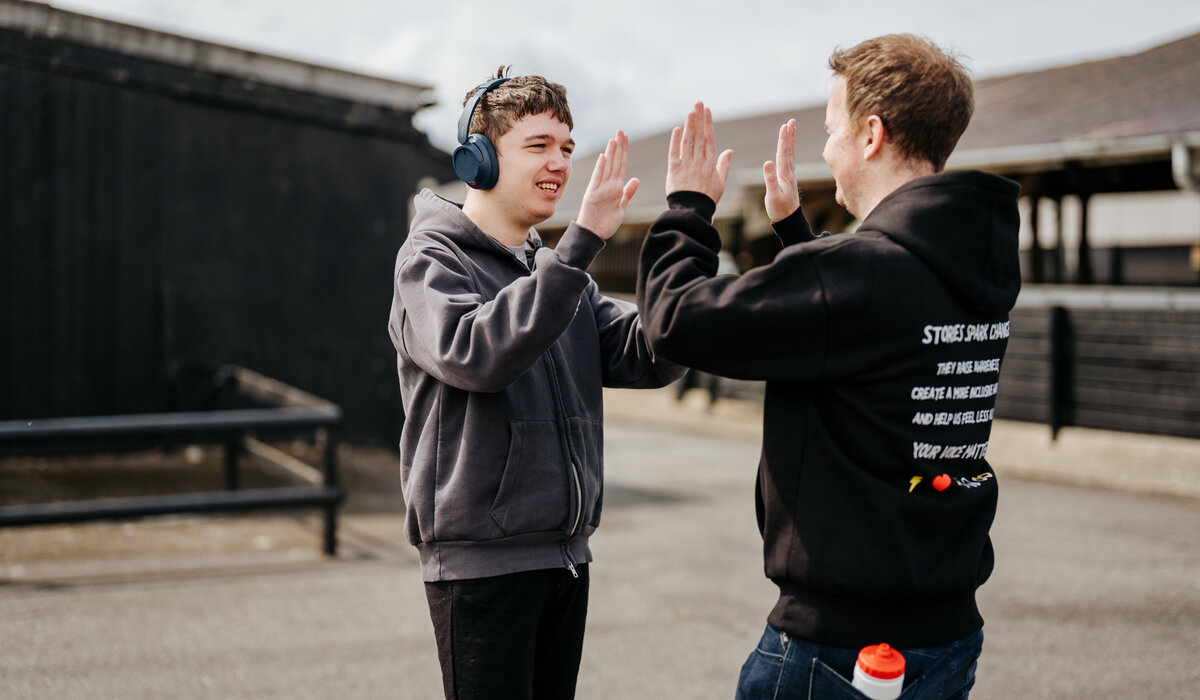
“Along with the struggles, there are lots of beautiful moments and lots of hope.”
James tells us what he’s learned from his sons Jude and Tommy, the power of sharing stories and what true autism acceptance would look like for them.
When Jude and Tommy were toddlers, what were the signs they might be autistic?
Back then, I knew nothing about autism. So the signs we were seeing didn’t scream out to me that Jude was autistic because I didn’t really understand it. His mum, Charlotte, noticed Jude wasn’t hitting his milestones at nine months. She was going to baby groups and noticed Jude wasn’t keeping up with the others.
It got dismissed at first. The doctor said: “He’s a boy, he’ll catch up. He was premature.” I was like: ‘He’ll catch up in his own time.’ Then, as time went on, he wasn’t showing signs of catching up. We went on holiday when Jude was one, and there was a German girl in the next apartment who was pointing at things and naming them, and she was younger than Jude. Looking back, it was so obvious. He was quite distant at times, didn’t point at things and struggled with certain food textures.
When we went for his appointment, we knew we were going in there and coming away with a diagnosis. Three years later, we were back in the same room doing the exact same thing with our son Tommy. I think with Tommy, we were looking for it, always comparing, always thinking: ‘Is he going to be autistic?’
With Tommy, it was similar things with milestones. He would also bury himself in corners and down the side of sofas. If everything became too much, he’d seek that deep pressure before we knew what it meant. Again, he liked lots of repetitive play, but he was more into playing with toys than Jude. But then we ended up in that room again.
How did you feel when Jude was diagnosed?
I felt petrified, really upset, heartbroken for what it might mean for him. They used words such as ‘severe autism’ and said he might never talk, which is heartbreaking when your child’s two and you’ve no experience of that world. Your head naturally goes to: ‘Will he ever talk? Will he ever make a friend? Will he be bullied at school?’ Especially when, naturally as parents, we have this built-up vision of what life will be like. That takes a lot of adjustment and understanding, especially when you don’t know much about autism – it is very scary.
Back then, there wasn’t much online about it. This was 16 years ago, and everything was quite medical. There’s a lot of fear in the unknown. Now, you can see other people’s lives and imagine what life will be like.
“Stepping back from social occasions makes your kids happier. But it can be quite isolating”
What were some of the biggest struggles you faced?
The biggest has been communication. Both Jude and Tommy are non-speaking. When they’re struggling, it’s really hard to know why at times, whether it’s a sound that’s upset them, an illness or something that happened yesterday. In the younger years, you’re going to parks and birthday parties, and that struggle with communication is really highlighted. You’d give anything to know what they’re thinking.
And it’s the isolation. Stepping back from social occasions makes your kids happier. But it can be quite isolating, especially when you’re scared of what the future holds, and you might not have anyone to talk about it with.
Did Stories About Autism come about because of that isolation?
Yes, it was partly that. I was a typical man and didn’t really talk about anything. I found it really emotional to talk about because we were having quite hard times back then.
Every time I’d try to describe Jude and Tommy, all these feelings would rush to the surface, and I’d stumble over my words and not know what to say.
One day, I was in the pub, and friends asked a few questions. We had this conversation about some of the challenges, the good moments and that I was struggling with sleep. I realised they didn’t know what to ask or say either. I thought: ‘Why not write it down? Then hopefully they’ll read it in their own time, and maybe it will help us have conversations in the future’.
It started as a blog. I shared a story, and suddenly there were comments from friends I hadn’t seen for years, saying: ‘Oh, I didn’t know your boys are autistic.’ It snowballed from there. I remember the next time we met up, how easy the conversations were. It broke the ice, and people could say: ‘I saw Tommy tried a new food last week’ or: ‘It must be tough, I saw Jude didn’t sleep last night’.
What’s your advice to anyone thinking of posting their story?
Go for it. Every story is unique, and everyone’s perspective is important.
By sharing your story, you’ll find someone who is living a very similar experience, and it can help you connect. You could be having a really hard day, and someone puts a comment, and it can make you feel so much better knowing that someone else gets it.
Obviously, do it in a way you feel comfortable with and that gives your family dignity over everything. But share what you want to share and enjoy it.
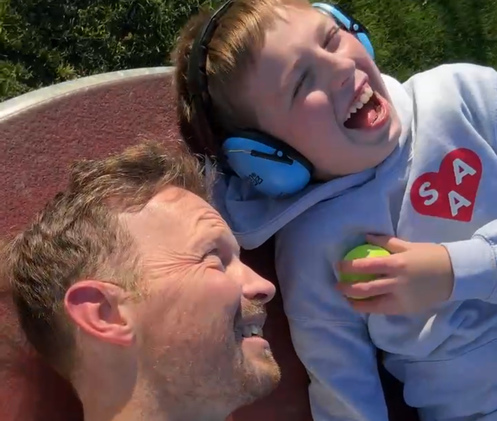
What would true autism acceptance look like to you, Jude and Tommy?
The biggest thing would be less judgement. Jude and Tommy are young men now, and visibly, they’re very different from when they were five and bouncy little kids. You get people who understand when they see a 17-year-old bouncing around. And then you get the people who stare or might be rude.
So, to be more accepting, less judgemental and to assume competence at times. Our kids can get labelled and judged that they don’t understand or they’re not able to do something. Tommy and Jude prove me wrong all the time. So, more acceptance would be less judgement and more opportunity.
What have you learned as Jude and Tommy’s dad?
One of the biggest breakthroughs was learning the best way to connect with Jude and Tommy, and it was that I stopped trying to change them. Jude used to love tapping radiators and water bottles. That was him stimming, having fun. And automatically, you think: ‘Well, no, he’s six. He should be playing with a ball or toys.’ But that meant I was the person trying to stop him doing what he was doing. Instead, we joined him. I used to sit with him and tap bottles and radiators and just build that bond and have fun with him. That also helps them trust you. Then, when you do want to stretch them a bit or go somewhere new, that trust is there because they know you’re considering their needs.
I think I’ve learned that we communicate in so many different ways. In the early days, you are so focused on trying to help your child speak. But now, we work much more on other ways of communicating and understanding each other. That’s why my memoir is called Love needs no words. It’s about realising those moments of connection can happen in so many ways other than speech. One of the biggest moments on Stories About Autism was Jude in the paddling pool with my dad. My dad is filling it with warm water, and Jude gives him a kiss on the cheek because he’s made the water warm. He can’t say it, but that’s his way of saying thank you. Recently, Tommy’s been texting me, which is incredible. He’s used an AAC device for about six years to request things. But he’s never used it to have a conversation with me, to explain how he’s feeling or what happened today. But about four months ago, we started texting, and each conversation is showing me a bit more of what he’s thinking.
Along with the struggles, there are lots of beautiful moments and lots of hope. One of the chapters in the book is about ‘inchstones’. It’s those tiny things that other families might not celebrate or recognise, but for you, are huge. Even now, every time Jude sticks a spoon in his yoghurt and eats it independently, it makes me smile. With Tommy, if we go to the park and go on the same bits of equipment in the same order, and he comes off happy, that’s massive for us. It just changes your outlook on everything. Really, really enjoy every tiny little bit of progress, and really enjoy the everyday things that make them happy.
Follow Stories About Autism on Instagram, Facebook and TikTok. James also runs SAA clothing and has a shop in Burnham-on-Crouch, Essex.
James’ memoir, Love needs no words, is available now, in all formats
This article first appeared in Your Autism magazine. Become a member and get Your Autism delivered to your door four times a year.