

Why we desperately need to start believing autistic people
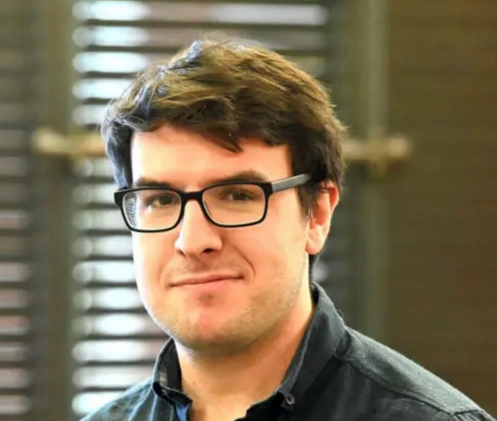
Joey Nettleton Burrows is our Policy and Public Affairs Manager
21/08/2026
Joey Nettleton Burrows is our Policy and Public Affairs Manager and is autistic. In this blog, he discusses why politicians, the media and the public desperately need to start believing autistic people.
A recent trend in media stories that are quick to dispute the validity of the autistic experience has the potential to have devastating impacts, especially when a government commissioned review into the Prevalence of mental health, autism and ADHD is due. There are nuances to public portrayals of autism, but an overwhelming amount of coverage falls into two camps; the first, downplaying the rigour of the diagnosis process and the second seeking to create a sharp division between the deserving and the undeserving.
Professor Dame Uta Frith publicly questioned Chris Packham’s autism diagnosis because of his ability to communicate, and her essay was used by major media outlets to question the reality of autism itself. Being articulate in no way means someone can’t be autistic, in fact being able to talk at length about a subject of particular interest as Chris Packham does, is common for many autistic people even when they struggle to communicate in other areas of their life. That is why you can’t deny someone’s diagnosis just because you have seen them on TV. Earlier in the year, Frith questioned the validity of women and girls being diagnosed as autistic. Professor Jason Arday, meanwhile, was subjected to intense public scrutiny that spread far beyond questions about his academic work into deeply personal examination of his life, childhood and autism. Following his tragic death, his family described years of sustained abuse and misinformation.
These were very different circumstances, but the same disregard for autistic people was visible in both. The achievements of both were treated as evidence they were not autistic, and their dignity became secondary to disturbingly hostile public narratives.
The damaging message beneath these claims is that autistic people are not believed and cannot be trusted to describe their own lives. These harmful media stories also create political space to restrict support for autistic people, rather than improve it, with the added bonus of claiming to help save Government money. They turn attention away from chronic underfunding, government inaction and services that have never been put in place.
“Government failures are obscured, while autistic people and their families are blamed for a broken system.”
Being autistic isn’t easy
Autistic people experience some of the starkest inequalities in our society. They are three times more likely to die by suicide than non-autistic people, twice as likely to be excluded from school than non-SEND students and only three in 10 autistic people are in work, one of the lowest employment rates, and face the widest pay gap among disabled people.
They are more likely to die early, be detained in mental health hospitals, face long waits for social care that often does not meet their needs, have their physical health needs missed, be denied mental health support and experience substantial stigma and discrimination. This isn’t a ’trend’ that people are desperate to join.
“Why isn’t there more urgency and outrage to address these chronic inequalities, rather than spending so much time questioning if we should believe autistic people, or debate which autistic people to believe?"
Instead, the media repeatedly jumps on claims that it is easy to obtain a diagnosis or that some people might not really be autistic, while giving far less attention to the real scandals: massively increasing numbers of autistic people detained in mental health hospitals, tragically high suicide risks, restrictions on the liberty of autistic people with a learning disability and families left without support.
Autism may be receiving more media attention, but it is not receiving more balanced treatment. Sensationalist coverage has real consequences. It increases stigma, makes it harder for autistic people to be believed and creates an environment in which governments can restrict support while blaming those who need it.
Autistic people are not believed
For autistic people, and disabled people more generally, their accepted place in society is too often that of the dependent and tragic person who can be pitied but not treated as an equal.
If an autistic person achieves academically, works or finds some level of success, that success is used to deny the continuing reality of their disability. If their distress and support needs are visible, their wishes, feelings and agency may be denied instead.
For some autistic people they are disbelieved because they can speak, study, work or appear to cope in certain situations. But outward achievement does not reveal burnout, sensory distress, poor mental health, difficulties with daily living or the support being provided behind the scenes.
They are expected to prove their suffering, but only in a form that other people find credible and socially acceptable.
Autistic people with high support needs face the same refusal to understand their needs. Their distress may be dismissed as “challenging behaviour”. Self-injury, withdrawal, aggression, changes in sleep or refusal may communicate pain, fear, trauma or sensory overload, yet the response can focus on controlling the behaviour rather than finding its cause.
Double discrimination
“We are only beginning to properly understand how autism can present in women and girls, yet autistic women are still particularly likely to have their autism doubted.”
We already know that women’s concerns are frequently dismissed across health services. Autistic women can therefore be disbelieved because of both their gender and their autism. This risks important health needs being overlooked and potentially lifesaving research and policy changes being missed if autistic women’s voices are dismissed.
Autistic people from ethnic minorities also face overlapping discrimination. Studies across different countries repeatedly identify racial and ethnic inequalities in whether, when and how autism is recognised and diagnosed. This points towards entrenched prejudice and unequal recognition, not one ethnicity being inherently more likely to be autistic than another.
Their experiences may be filtered through racial stereotypes as well as misconceptions about autism. Their needs can be misunderstood, minimised or punished instead of recognised and supported.
The overdue recognition of women, girls and ethnic minority autistic people is not evidence that diagnosis has gone too far. It is evidence of how many people society previously failed to see.
Families are disbelieved and judged
The refusal to believe autistic people also extend to their families.
The systems are rife with parental blame that isolates families through hostile, threatening and punitive action. Parents report being blamed for their child’s difficulties, threatened with fines and court action, and disempowered by the professionals surrounding their child. Half reported developing a new mental health condition while trying to deal with the difficulties facing their child in school.
Media claims that diagnosis is easy or that parents are seeking unnecessary support fuel this treatment. They make it easier for professionals, schools, friends and relatives to dismiss or disbelieve parents who face a constant fight to have their child’s needs recognised and supported.
These parents are not seeking an unfair advantage. They want their child to receive an education, obtain appropriate support and live a dignified life. Many live with the very real fear that their child will develop serious mental health difficulties because the necessary help does not exist.
Blaming autistic people protects failed systems
“If government confronted the real issues, they would also have to confront the real solutions. That means listening to autistic people and their families, funding services, improving commissioning, creating appropriate school places, providing accessible mental health and social care support, protecting people’s rights and removing barriers to employment.”
It would mean admitting that government, institutions and society have got things wrong.
It is much easier to argue about who is and is not deserving of support.
Services have not been built. Support has not been funded. Barriers have not been removed. Autistic people and their families have repeatedly warned about the consequences and have repeatedly not been believed.
These failures belong to government and our society as a whole. Yet it is autistic people and their families who continue to pay the price.