Preparing for the holidays: tips from our Day Centres
Ivan, Dewayne, Louise and Elaine - Day Centre managers
Louise Sherwin is the Service Manager at our Surrey Day Centre. She works with Elaine Fagg, Deputy Manager, to provide local support at Birch House, Surrey.
Ivan Cammarata is the Service Manager at our West London Day Centre. He works with Dewayne Barrett, Deputy Manager, to provide support at Longfield House, Ealing.
Our wonderful service managers share what Christmas looks like at their centres and how they support the people they work with during the festive period.
December is a busy time with lots of change, whether you celebrate Christmas or not. The National Autistic Society provides a range of community support services, including 11 Day Centres across the UK. We wanted to share insights from the managers at two of our Day Centres and hear more about what they do in the run-up to Christmas, with helpful tips for families and adults who want to know how to make the holidays easier and more enjoyable.
How do you like to prepare for Christmas at your Day Centre?
Louise: “Most of the people we support enjoy Christmas, so we’ve already had requests for what type of decorations they’d like. We like to have their input. We start gently with Christmas activities and then we start building up. We don’t do it before December because timing is really important for people – December is the Christmas month.”
Ivan: “We do Christmas sessions like arts and crafts, and people make loads of artworks. We did our tree in November this year. We’ve sometimes struggled to maintain decorations on the wall or Christmas tree – they get ripped off. So this year, we’ve kept the decorations out for people to do it themselves, and we’ve found people are coping much better. We try to do it in connection with the people we support, not just staff.”
Christmas tree decorated by the people supported at our West London Centre
Our team’s tips on how to prepare for the holidays:
- Start planning for Christmas early and involve autistic people in these preparations.
- Create a schedule that works for you – some people start very early, and others prefer to start later.
- Reduce anxiety by starting slowly and introducing changes gradually.
How do the people you support get involved in the festive period?
Elaine: “The people we support can be involved in the planning, and we have their ideas put forward as well. So if they wanted to do a quiet Christmas bingo game because they do bingo every week, they can. Whether we have it in a Christmas theme or we just do bingo and lay off Christmas, that’s not a problem. People at our centre still have their routine, and we prepare everyone in advance, so they know what’s happening.”
Louise: “There’s always staff around who can take people out to do community access, if they want to go for a walk into town or feel like they want to be away from it completely. There’s no pressure put on anyone to join in.”
Ivan: “Everyone helps with the preparation, and the people we support choose the theme they would like to do altogether. Then they start working on that chosen theme.”
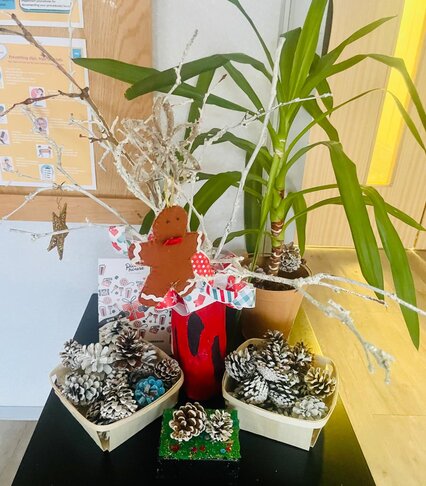
Dewayne: “We make all the decorations from scratch. We make Christmas cards. We do a Christmas lunch. Over time, day by day, we do little bits. It’s a slower preparation, but we’re getting there for Christmas.”
Handmade decorations at our West London Centre
Our team’s tips on how to get autistic people more involved:
- Create themed activities, but allow for regular activities to help maintain a routine.
- Make sure there are ways people can get away from it all if they need to.
- Go at your own pace and try not to put pressure on yourself or others.
How do you like to support autistic people who may struggle with these seasonal changes or don’t celebrate Christmas?
Elaine: “We have places, quiet rooms, that don’t get decorated for those that don’t want to partake. We make sure it’s not everywhere. It’s adapting the activities that we do and just adding a bit of Christmas to it. You’re sort of observing people in the activity to see if they’re engaging or if they seem uninterested. We have a couple of people who may have sad times at Christmas where they’ve lost parents. So it’s being aware of that side of it as well because it can be tough for anybody, but if you find it hard to understand, it’s even harder.”
Decorations at our Surrey Centre aren't put everywhere

Louise: “People do come and talk to us, or if staff working with someone recognise that they’re not their usual self, they’ll approach them, check they’re alright and just let them know that somebody is here. We take the time to listen to everyone and work out how best to support them. […] We’ll talk to them. We’ll give them Social Stories. We’ll communicate with them using their preferred communication.”
Dewayne: “Some people go home to family for Christmas, but a few people here have lost parents, so coming up to this time of year, it’s about reassuring people about Christmas, preparing people so they’re less worried and respecting their independence.”
Our team’s tips on dealing with seasonal changes:
- Don’t decorate everywhere, and have quiet spaces if needed.
- Observe and listen to autistic people to understand what they need.
- Be aware that it’s not a happy time of year for everyone.
- Provide reassurance and communicate about changes in the run-up, especially bigger changes.
What are the common challenges autistic people and their families can face at Christmas?
Elaine: “Well, one of the big things is everything gets busy visually, physically, even with traffic. It’s all those little things that add up. We’re aware that different people have different triggers.”
Louise: “I think a big one for families as well is the routine just completely changes. Families at home feel like they have to meet certain expectations, so they’ve got added pressure on them as well. We do find that some challenges increase as we lead up to Christmas, and then you have the new year blues because it is such an anti-climax. We’ve got different strategies in place for them. It just comes down to knowing people, giving them time to express themselves how they need to express themselves or communicate in the way they need to communicate, or just knowing when to give them space.”
Ivan: “To me, it’s about loneliness, and those feelings can be quite difficult to express.”
Our team’s tips on understanding common challenges:
- Small changes to the environment can add up – be aware of people’s triggers.
- Added expectations and pressure can increase challenges in the run-up to celebrations – give people time and space to express themselves without expectations.
- Be aware that autistic people can be at greater risk of loneliness during the holidays.
Do you have any final tips for supporting autistic people during the festive period?
Elaine: “Listen to the person, like with their body language. Don’t play carols if they don’t like music in the background and know what they like to do. Don’t be offended if they want to go off to their room, be on their own and just chill out to get away from all the noise. You could have a plan for the day and talk about a plan in advance. You can have it in a written form or a picture form, like a timetable. But you can also have something like a ‘whoops’ card to use if something happens that you weren’t expecting. Give them choices as well. Do you have crackers, or don’t you have crackers? Do you have ones that bang or don’t bang? One of the guys we support came to us and said he’d been told that ‘Christmas is for children’, and we said ‘Well, we enjoy Christmas. Christmas can be for everybody, and everybody is different.’ You don’t need to follow the norm.”

The people we support decorate the Surrey Centre how they like it.
Louise: “It’s having that line of communication open and working with someone, even if it’s keeping up the daily routine of what time they get up and have breakfast if nothing else in the day is as it would normally be. That small amount of structure could just be enough to stop a meltdown. Don’t put expectations of other people on this time of year. So what if they want cheese on pasta and they don’t want roast turkey? As long as they’re happy and eating, don’t worry about it. If they want to sit crossed-legged with their plate on the floor, what does it matter? I’d take that any day than someone getting distressed.”
Ivan: “We are one of the most important connections to the people we support. We try to be their support, but in a way also part of their family. […] We work with someone who naturally isolates themselves, and we ask him all the time if everything is okay. It’s about guaranteeing support and reassurance, making sure people are okay.”
Our team’s tips on supporting autistic people during the holidays:
- Look for non-verbal cues about how someone is feeling and be aware of what they like and don’t like.
- Don’t be offended if an autistic person doesn’t want to get involved or needs some space.
- Have a plan, but expect unexpected things to happen – and plan for these too!
- Give autistic people choices.
- Whatever people do for the holidays is up to them – don’t follow the norm.
- Work with the autistic person and be open.
- Try to find little moments of normality to maintain a routine.
- Forget the expectations of other people – don’t judge yourself by their standards and focus on what makes you happy.
- Check in on people and make sure they are okay and have enough support, even if they tend to isolate themselves.

Christmas stickers at our Surrey centre